01
8x the test surface.
25 live at once instead of three.Three ads live at a time isn't a test. It's a queue. With 25 running against each other in one window, the winner shows up in a single read instead of six.
FOR BRANDS SPENDING $20,000+/MONTH ON META
Street interviews, UGCs, and podcast ads. Finished, uploaded, and running in your account before your next creative meeting.
Less than 17 minutes on average. No pitch.

%201.png)

%201.png)









What's behind it?
You've already checked. Probably twice.
Audience didn't change. Auction didn't change. Offer didn't change. You pulled the three levers everyone pulls, the number moved for about a week, then settled back exactly where it started.
In that order. Every time.
Here's what nobody says out loud. The only variable that's been constant all year is the kind of thing you're putting in front of people.
You know exactly what's happening.
You know exactly what fixes it.
You have three. Two of them are variations of the one that's dying.
That isn't a production budget problem.
That's media budget you're burning because production couldn't keep up.
And it compounds. Every week the account runs on a fatiguing asset, frequency climbs, CPMs climb with it, and the audience you'll need for the next winner gets a little more tired of you before it ever sees one.
You already know roughly 25 variations gets you one or two that hit. That's not a theory. It's how you've run for years.
You have three, then three more, each batch testing against a baseline that has already moved.
Three ads live at a time isn't a test. It's a queue. With 25 running against each other in one window, the winner shows up in a single read instead of six.
One test becomes a portfolio. Same calendar window, radically more creative surface.
Something hits on a Tuesday. Everyone else puts the variants in the next production cycle. Ours run that Friday.
That was never the hard part.
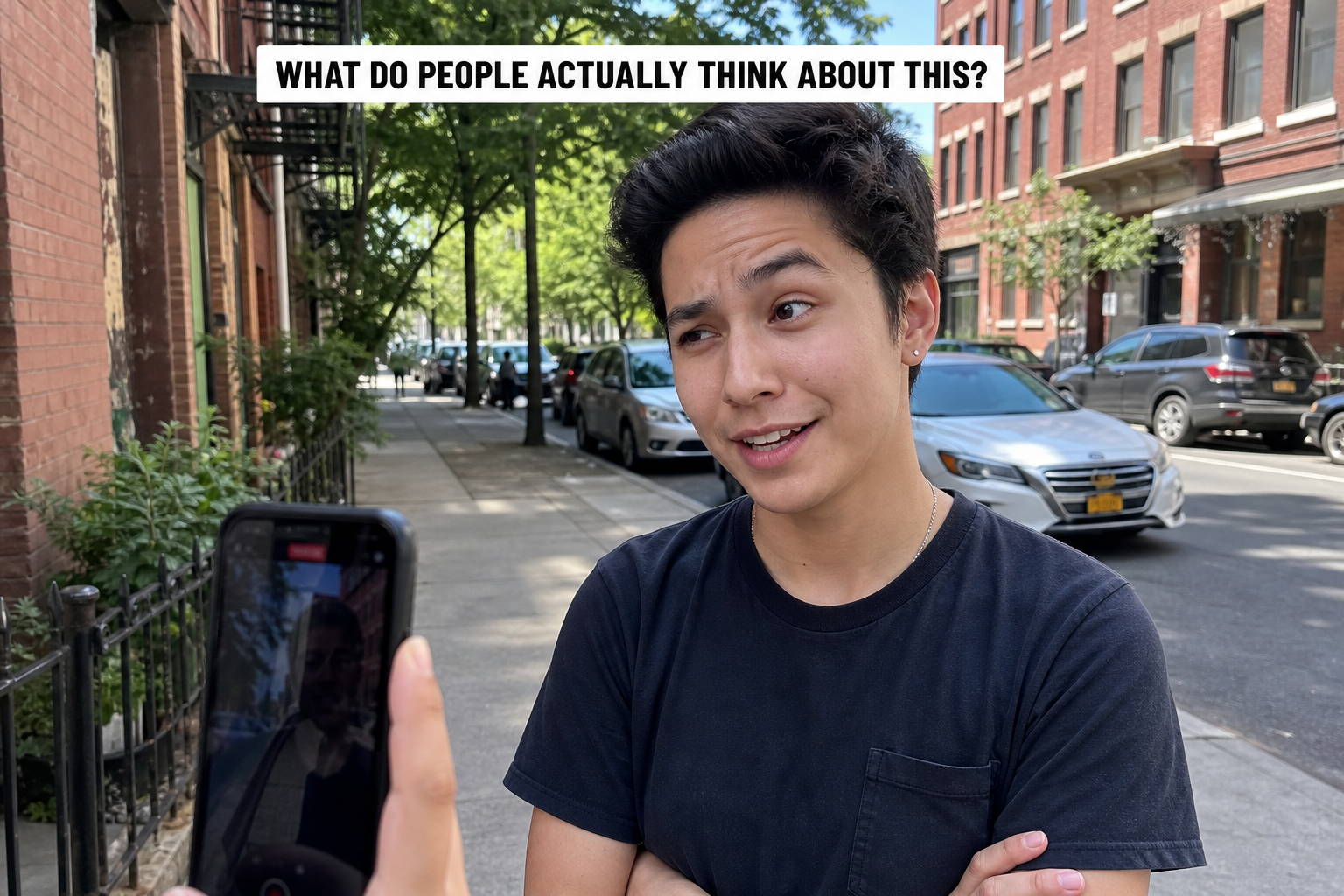
Shot in public with nothing staged. The credibility is structural because the person answering isn't the one selling.
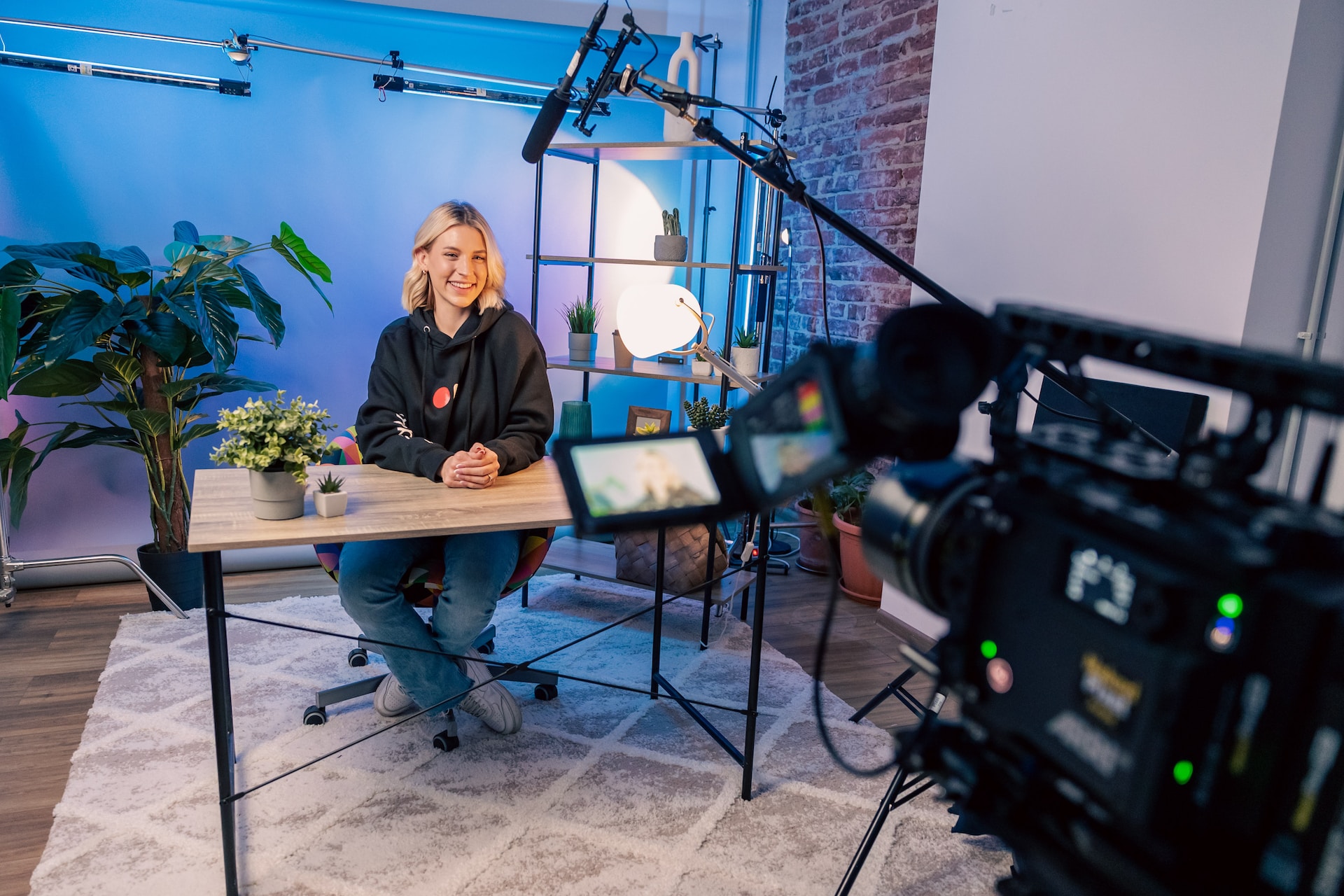
The format your buyer already trusts, made properly and at volume.
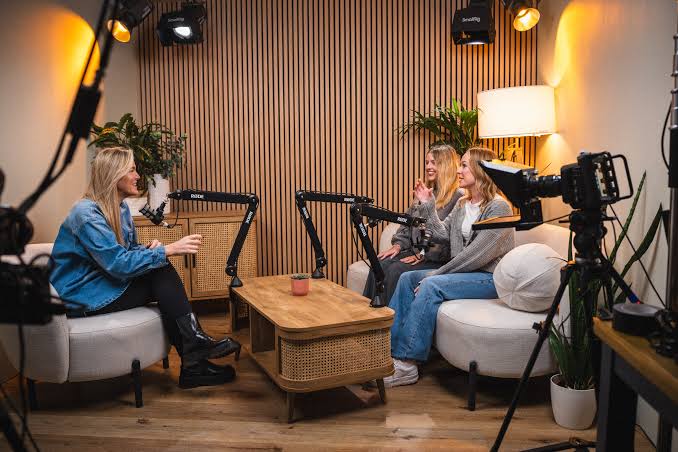
Real conversations around something that worked. Native, credible and deliberately different from traditional ads.
People kill an ad in the first second because they recognize its shape. None of these have that shape.
The bottleneck was three other things.
Finding people who don't read as actors. Every project, from scratch. That's two to three weeks before anyone rolls.
Knowing what the person should actually say. That's research, not production, and it's the part that decides whether the ad works.
Twenty-five ads is twenty-five edits. Contract that out and you're queued behind three other clients.
You approve the direction, and your notes on any ad get actioned the same week. We just don't make you write the briefs to get there.
That's why nobody else quotes you this timeline. Matching it means carrying a roster and an edit bay against no guaranteed volume, and an agency billing per project has no reason to hold that cost.
SHOW ME WHAT'S BLEEDING → Less than 17 minutes on average. No pitch.
The format works. Your buyer trusts it.
That was never the problem.
Hours in a marketplace or scrolling profiles. Most never reply.
Do they look like your buyer? Can they hold a camera? Have they done this before? You find out after you have paid.
Rate per video, usage rights, whitelisting, exclusivity. Every creator. Every time.
Cost, tracking, and one to two weeks before they even have it in their hands.
Hook, angle, talking points, what to avoid. Per video. There goes your afternoon.
A week. Sometimes three. They have a day job and you are not it.
Audio is off. The angle is not what you asked for. The delivery is stiff in the one place it needed to be natural.
Another round of notes, another week, and a creator who is noticeably less enthusiastic than they were.
Two, maybe three usable videos.
One does okay.
Sixty days, give or take.
The cycle starts again.
You approve a direction once. Twenty-five to fifty finished ads arrive. Your notes on any of them get actioned the same week.
When I was creating, the brief would land in my inbox saying "make it feel authentic," and that was the whole thing.
No angle. No research. Nothing about who was watching or what they already believed.
I'd shoot what I thought they meant, send it over, and wait. Three rounds of notes would come back, and every round said the same thing underneath the words:
This isn't it, and I can't tell you why.
Then I ended up on the other side, sourcing creators for a brand, and it turned out the answer was a founder at eleven at night, writing a brief for a video she needed three weeks ago. So I started at the top of that same list. Eleven days went into finding one person who looked like their buyer and could hold a camera steady. After that came the rates, and once we'd settled those there was usage rights, and then product to ship and a week of waiting for it to land. By the time anyone was ready to write the brief, there was nobody left to write it but me.
Three usable videos. Six weeks. A piece of every single week in between. And because creative dies at around sixty days, we started the whole thing again before the quarter was out.
That's the part that stays with you. Not that anyone failed, but that everyone did their job properly and it still took six weeks to get three videos. Nobody in that loop was doing anything wrong. Not the creators, not the brand. The process itself was the cost, and both sides were paying it. Which is why I stopped trying to work faster inside it and built something that removes it. Actors on retainer instead of cast for every job. Angles researched before anyone rolls. Editors sitting in-house rather than queued behind three other clients.
And nobody spends eleven days looking for one person again.
That is the entire speed advantage.
Which of your live ads are fatiguing. Which are already dead and still spending. Which of your problems aren't creative at all.
Not concepts. Not scripts. Uploaded and running.
Street interviews, UGCs, and podcast ads, cut from the same shoot days.
Ten to fifteen new ads, so the replacement is finished before the current winner fades.
Then we mine your reviews, your sales calls, and every ad your competitors currently have live. What's saturated, what's been tried and abandoned, what nobody is running.
“They're just more engaging. People sound much more natural. It comes off as more of an authority.”
“It just looks super native. It doesn't look like an ad.”
“We have a media buyer in our business, and he recommended you.”
“We were getting stuck making three or four creatives at a time. Having a whole batch ready to test changed the way we think about creative.”
“The biggest difference was how quickly we could test new angles. We didn't have to wait another month just to get more creative into the account.”
“The ads actually look like content people would watch. We started seeing which hooks worked instead of guessing what we should make next.”
Every agency in this category takes the money upfront, ships a deliverable, and calls that the job.
Month to month. Cancel any time.
"We generated over $50,000 in revenue with that one podcast ad it was the one we least expected to work"

That last one isn't fine print. If everything moves at once,
nobody can tell whether the creative worked, including you.
We build angles out of your market. We're not selling those angles to the brand bidding against you for the same impressions.
A standing roster is still a finite one. Every slot is a shoot day already paid for.
When the month is booked, the next opening is the month after.
You could shoot them. You'd struggle to cast them, and you'd struggle to edit twenty-five of them. That's where the time goes, not the filming.
Same format, different supply. A creator sells you one video at a time, off a brief you wrote, on their schedule. We run UGC as a production line, alongside street interviews and podcast, from a roster that is already booked. The difference shows up at ad fifteen, not ad one.
Scaling a fatiguing creative raises frequency against a worn-out asset. It works right up until it doesn't, and the harder you push, the faster that happens.
It replaces the way you buy it. Most brands are getting UGC one video at a time from whoever is available, which is why it plateaus at okay. Same format, produced at volume against angles mined from your market, behaves completely differently.
Really. It isn't speed of work, it's absence of setup. No casting cycle, no location scout, no edit queue. The roster is already booked when you sign.
We keep working. That's the guarantee. We don't stop at a deliverable, we stop when your numbers move.
It depends on volume, not on your ad spend. We quote off how many ads you need a month, not how much you're putting through Meta. That number comes out of the teardown.
Actors on retainer, creators from an established roster, and people sourced specifically for the angle and market.
The creative production system is built to work alongside your existing media buying team. Media buying scope can be discussed during the teardown.
Less than 17 minutes on average. We pull up your live ads, show you exactly which ones are bleeding and what it's costing you, and you leave with the teardown whether you work with us or not.
SHOW ME WHAT'S BLEEDING → → Less than 17 minutes on average. No pitch.DISCLAIMER: This site and the content on it are owned and operated by Podcast Ads LLC. Every business is different and results depend on your offer, your market, your budget, and your execution. Nothing on this page is a guarantee of revenue, return on ad spend, lead volume, or any other business outcome. Any figures, case studies, or client results shown are specific to those clients and are not typical, average, or promised. Podcast Ads LLC does not provide legal, tax, accounting, or investment advice.
This site is not part of, endorsed by, or affiliated with Meta Platforms, Inc., Google LLC, YouTube, TikTok, Spotify, or Apple Inc. All trademarks, podcast names, show titles, and logos referenced remain the property of their respective owners and are used for identification only.
©️ 2026 Podcast Ads LLC. All rights reserved. Privacy Policy · Terms of Service ·